When the Screen Brought Them Back: Community Screenings as Unlikely Reunion Grounds
A Seat in the Dark, A Face From the Past
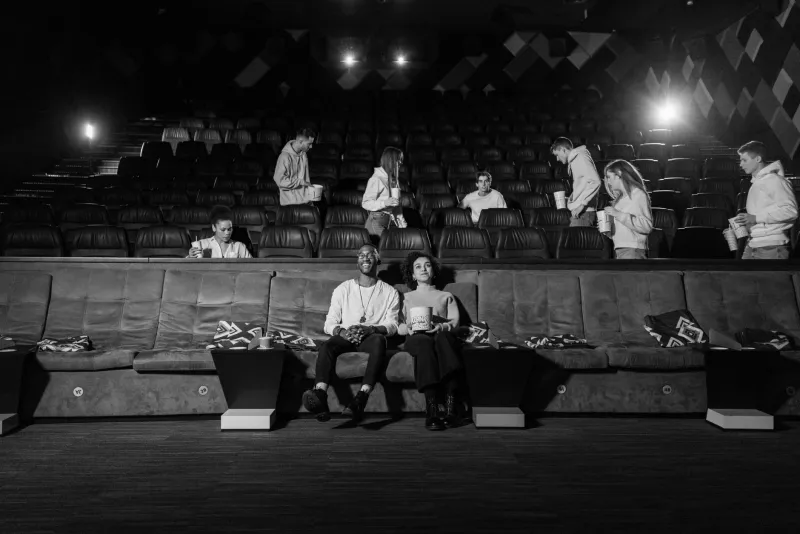
Sarah Holloway had not spoken to her college-era friend Marcus Webb in nearly eleven years. Life, as it tends to do, had intervened — careers diverged, families grew, and the particular rhythm of a shared friendship quietly dissolved. She did not expect that a Tuesday evening screening of a Princeton TV documentary about the borough's historic Witherspoon Street corridor would change that.
"I saw him across the room before the film even started," Holloway recalled. "We both laughed because neither of us could explain what we were doing there on a random weeknight. But we'd both seen the announcement and thought it looked interesting. That was enough."
That chance encounter led to a two-hour conversation after the screening ended, a follow-up dinner the following week, and what Holloway now describes as a fully restored friendship. Her story is not unique. Across Princeton's community screening circuit, similar moments of recognition — and reconnection — have become a quietly consistent feature of the experience.
The Mechanics of Coincidence
It would be tempting to attribute these reunions entirely to chance. Princeton is, after all, a town of manageable proportions, and the odds of running into a familiar face at any given public event are reasonably high. But those who study community media and social behavior suggest something more deliberate may be at work.
Community television programming, by its very nature, draws audiences who share a specific attachment to place. Unlike a blockbuster film or a nationally syndicated series, a Princeton TV production about local history, neighborhood development, or a familiar civic figure functions as a kind of selective magnet. It attracts people who care about the same geography, the same stories, and often, the same era of a shared past.
"There's a self-selection process happening," explained Dr. Renata Osei, a communications researcher at a nearby New Jersey institution who has studied local media's role in community cohesion. "When you attend a screening of content that is explicitly about your community, you are already signaling something about your values and your sense of belonging. You're likely to find others who share that same orientation — and quite often, those are people you already knew."
More Than Nostalgia
The programming itself appears to play an active role in facilitating these connections. Princeton TV's locally produced content frequently features faces, places, and stories that longtime residents recognize from their own histories. A documentary segment about Palmer Square's transformation over the decades might include footage from the 1990s. A profile of a longtime community volunteer might reference neighborhood events that viewers attended decades ago.
This kind of content does not merely entertain — it activates memory in ways that commercially produced media rarely achieves. Viewers find themselves simultaneously watching a screen and mentally revisiting their own timelines, which creates a particular kind of openness to conversation.
Robert Anand, a Princeton resident who attended a spring screening of a Princeton TV program about the town's music venues, described the effect precisely. "You're watching something and thinking, 'I was there for that.' And then you look around and realize the person next to you is nodding at the same moment. That's a very specific kind of recognition."
Anand reconnected with two former colleagues at that screening — individuals he had worked alongside in the early 2000s before a period of professional upheaval scattered their group. The three have since established a standing monthly dinner.
The Limits of Digital Connection
The phenomenon takes on additional significance against the backdrop of a broader cultural conversation about the inadequacy of digital communication as a substitute for genuine human presence. Social media platforms have, in theory, made it easier than ever to maintain contact with people from one's past. In practice, many users report that algorithmic feeds and passive engagement have replaced rather than enriched meaningful connection.
Community screenings offer something categorically different: a shared physical space, a shared duration of experience, and the natural conversational opening that follows. Unlike a comment left beneath an old friend's photograph, a face-to-face encounter at a screening carries the full weight of presence — body language, tone, the particular quality of a familiar laugh heard in person rather than imagined.
"I'd seen Marcus on social media for years," Holloway noted. "I'd liked a few of his posts. But that's not the same as actually being in a room with someone. The screening gave us a reason to be in the same place at the same time, which is apparently what we needed."
Princeton TV's Role in the Larger Picture
For Princeton TV, these reunion narratives represent something beyond a heartwarming side effect of programming strategy. They reflect the organization's foundational commitment to serving as a genuine community resource — one that measures its impact not only in viewership numbers but in the quality of civic life it helps sustain.
Community screenings have long been part of Princeton TV's public engagement model, offering residents a reason to gather around locally produced content in shared spaces rather than consuming it in private isolation. The social outcomes of these gatherings — the conversations, the reconnections, the renewed sense of belonging — are precisely the kind of results that distinguish community media from its commercial counterparts.
As the broader media landscape continues to fragment into narrower and more personalized streams, the communal screening experience represents a meaningful counterforce. It insists, gently but persistently, that some stories are best encountered together.
A Simple Invitation
For those who have drifted from old friendships and find themselves curious about what a Princeton TV screening might hold, the barrier to entry is refreshingly low. A posted schedule, an open chair, and a willingness to spend an evening in the company of neighbors — that is all the occasion requires.
The rest, as Sarah Holloway and Marcus Webb would attest, has a way of taking care of itself.
Information about upcoming Princeton TV community screenings is available at princetontv.org. Residents interested in submitting programming ideas or participating in future productions are encouraged to reach out through the site's community portal.