Beyond the Classroom: How Princeton's Young Residents Are Finding Their Voice Through Community Television
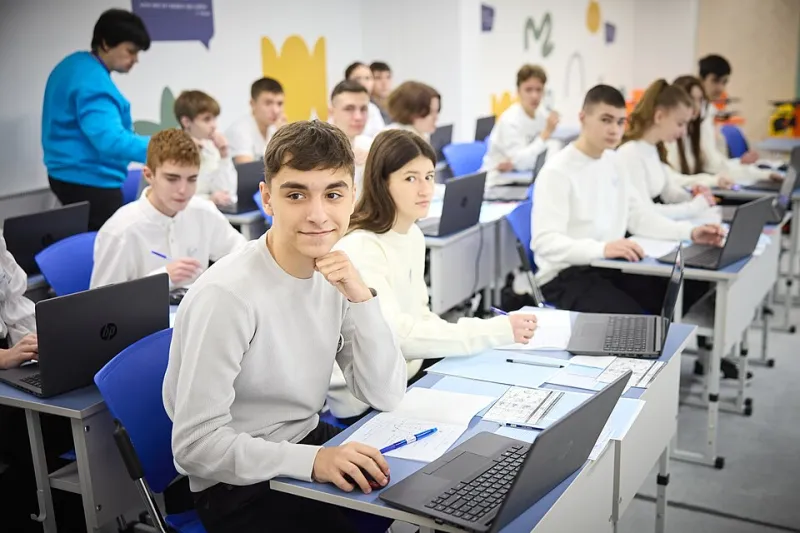
Photo: President Of Ukraine, CC0, via Wikimedia Commons
For most families in Princeton, the conversation about after-school activities tends to follow a familiar script: soccer leagues, music lessons, coding camps, debate clubs. Community television rarely enters the discussion. Yet a growing number of parents and educators are discovering that hands-on involvement in local broadcast production offers something that few extracurricular programs can match — a comprehensive, real-world environment where young people develop skills that matter long after the cameras stop rolling.
An Unexpected Classroom
Walk into a Princeton TV production session on any given afternoon, and the scene may surprise you. Teenagers are reviewing interview footage and debating which take captures the most authentic moment. Younger children are learning to frame a shot, considering what the camera includes and, just as importantly, what it leaves out. A group of middle schoolers huddles around a script, arguing — respectfully, for the most part — about word choice and narrative flow.
This is not a film school. It is a community media environment, and the lessons unfolding here are far broader than technical ones.
"What I noticed almost immediately was that my daughter started listening differently," said one Princeton mother whose twelve-year-old began participating in youth programming segments last spring. "She started paying attention to how people express themselves, to what makes a story interesting. She became a better communicator at home, at school — everywhere."
That observation aligns with what educators who work alongside young media participants have long argued: the process of producing a television segment demands a remarkable range of cognitive and interpersonal abilities, all applied simultaneously and under the kind of gentle pressure that builds genuine competence.
Thinking Critically, Collaborating Constantly
At its core, community television production is a problem-solving exercise. Young participants must identify a story worth telling, determine how to tell it fairly and accurately, coordinate with peers and adult mentors, manage time constraints, and ultimately present their work to a real audience — not a teacher with a rubric, but neighbors and community members who will form their own judgments.
"There is no substitute for authentic stakes," said a Princeton-area media educator who has worked with youth programming for several years. "When a student writes an essay, the audience is one person. When they produce a segment for community television, the audience is the entire town. That changes how seriously they take the work, and it changes what they get out of it."
The collaborative dimension is equally significant. Unlike individual academic assignments, television production is inherently a team endeavor. Roles must be assigned, responsibilities respected, and disagreements resolved — all in service of a shared goal. Children who struggle with group dynamics in conventional classroom settings frequently find that the concrete, task-oriented nature of media production gives collaboration a clarity it often lacks elsewhere.
Parents have reported watching previously shy children grow into confident on-camera interviewers. Others describe young people who had difficulty with structured tasks discovering a natural aptitude for the organized chaos of a production schedule.
Technical Competence as a Gateway to Broader Confidence
There is also the matter of technical literacy, which should not be underestimated. Young people who engage with community television learn to operate cameras, understand basic audio principles, navigate editing software, and think visually — skills that translate directly into college coursework, professional environments, and an increasingly media-saturated world.
But educators emphasize that the technical knowledge is rarely the most transformative element. Rather, it serves as a gateway.
"Mastering something real and visible gives kids a foundation of confidence that is hard to manufacture any other way," said one elementary school teacher in the Princeton area who has encouraged students to explore local media opportunities. "Once a child has produced something that other people actually watch, they carry themselves differently. They know they are capable of something that matters."
That sense of mattering is not incidental. Community television, by its very nature, is rooted in local relevance. When a young producer covers a neighborhood event, interviews a local business owner, or documents a school initiative for Princeton TV, they are contributing to the historical and cultural record of their own community. The work has weight because the community it serves is their own.
What Parents and Educators Want Other Families to Know
For families considering whether community media involvement might be the right fit for their child, those with firsthand experience offer consistent encouragement — and a few practical observations.
First, prior experience is not a prerequisite. Princeton TV's youth-oriented programming opportunities are designed to welcome participants at every level, from those who have never held a camera to those with a genuine passion for storytelling. The environment is structured to teach rather than to select.
Second, the benefits compound over time. Parents describe children who began as hesitant participants and, within a matter of months, were actively pitching story ideas and mentoring newer members of the group. The learning curve is real, but so is the momentum it builds.
Finally, the skills transfer in ways that are both immediate and lasting. Critical thinking, public communication, collaborative problem-solving, and media literacy are not niche competencies. They are foundational to success in virtually every academic discipline and professional field a young person might eventually pursue.
A Community Investment in Its Own Future
Perhaps the most compelling argument for involving Princeton's youth in local television production is the one that extends beyond individual development. When young people learn to document and share the stories of their community, they become stewards of that community's identity. They develop a stake in local life that passive viewership can never produce.
The child who spends an afternoon interviewing a longtime Princeton resident about their memories of the town, or who helps produce a segment on a local historical landmark, is not simply gaining a media skill. They are building a relationship with the place they call home.
For Princeton TV, that relationship — between the community and its own stories — is precisely what local broadcasting has always been about. Inviting young people into the process of creating that content is not merely a programming choice. It is an investment in the community's future, told in the voices of the people who will one day shape it.
Families interested in learning more about youth involvement opportunities at Princeton TV are encouraged to visit princetontv.org for current program information and upcoming session schedules.