Your Home, Your Studio: Princeton Families Are Broadcasting to the World From Their Living Rooms
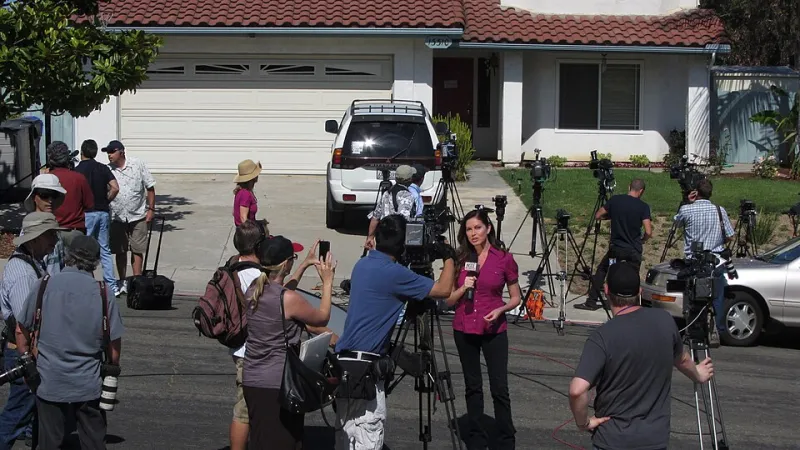
Photo: Pattymooney, CC BY-SA 4.0, via Wikimedia Commons
For most of television's history, the barrier between viewer and broadcaster felt insurmountable. Studios required expensive equipment, union crews, and institutional backing. The average household had no realistic path from watching television to making it. That calculus has changed dramatically, and nowhere is the shift more visible than in the residential streets and quiet cul-de-sacs of Princeton, New Jersey, where families are launching original programs from spaces that double as dining rooms and home offices.
This is not a fringe phenomenon. It is a genuine, grassroots movement—one that Princeton TV has been watching with considerable interest as it reshapes what community media can look like in the twenty-first century.
A Spare Room Becomes a Set
When Margaret Holloway, a retired high school science teacher living in Princeton's Witherspoon neighborhood, decided she wanted to share her passion for historical cooking, she did not apply for a grant or rent a production facility. She bought a $79 ring light from an online retailer, repositioned her kitchen island, and downloaded a free editing application onto her existing laptop.
"My daughter helped me set up a channel, and I filmed my first episode on a Tuesday afternoon," Holloway recalls. "By Friday, strangers in Ohio were leaving comments about their grandmothers' recipes."
Her series, which focuses on recreating dishes documented in eighteenth- and nineteenth-century American cookbooks, now draws a consistent viewership of several thousand subscribers. She films, edits, and publishes entirely on her own schedule, with no overhead beyond the occasional ingredient purchase.
Holloway's story is not unusual. Across Princeton, residents from a variety of professional and personal backgrounds are discovering that the technical threshold for producing watchable, even compelling, video content has fallen to a point where enthusiasm and preparation can substitute for most of what once required professional infrastructure.
The Equipment Is More Accessible Than You Think
The tools driving this democratization are worth examining in practical terms. Most producers interviewed for this article cited a core set of affordable investments that transformed their output from amateur footage to polished programming.
A modern smartphone—virtually any flagship model released in the past three years—captures video at resolutions that would have required professional cameras just a decade ago. Pair that device with a simple tripod (available for under $30 at most electronics retailers), a clip-on lapel microphone ($25 to $50 for a reliable entry-level model), and a ring light or a window with good natural exposure, and the visual and audio quality of the resulting footage is entirely broadcast-worthy for online platforms.
Editing software has followed a similar trajectory. Applications such as DaVinci Resolve offer professional-grade editing capabilities at no cost. CapCut and iMovie provide more streamlined interfaces for producers who want to spend less time in post-production. For those who prefer to stream live rather than produce pre-recorded content, platforms including YouTube Live, Twitch, and Facebook Live require nothing beyond an internet connection and a device with a camera.
David Osei, a Princeton-area financial consultant who launched a personal finance talk show eighteen months ago, estimates his total startup investment at under $200. "I spent more on a decent bookshelf to use as a backdrop than I did on the camera setup," he says with a laugh. His program, which features informal conversations with guests about budgeting, debt management, and long-term savings, has attracted sponsorship inquiries from two local businesses.
Finding Your Format and Your Audience
Equipment is only one dimension of the challenge. Successful home producers consistently emphasize the importance of format clarity—knowing precisely what kind of program you are making before you press record.
Cooking demonstrations, personal finance discussions, local history explorations, parenting conversations, book reviews, and neighborhood interview series have all proven viable formats for Princeton-area creators. What these formats share is a defined purpose and a specific audience in mind. Viewers do not stumble onto a channel and decide to stay; they arrive because the content addresses something they already care about.
Sophia Tremblay, who co-hosts a weekly talk program with her college roommate covering topics in environmental sustainability, recommends that aspiring producers study their prospective audience before committing to a format. "We spent two months just watching other people's shows and reading comments sections before we filmed anything," she explains. "That research shaped every decision we made about length, tone, and what questions to ask."
Tremblay and her co-host publish new episodes every Wednesday morning, a consistency she regards as non-negotiable. "Your audience has to be able to rely on you. If you disappear for three weeks without explanation, they move on."
The Community Dimension
What distinguishes Princeton's home broadcasting community from the broader landscape of online content creation is the degree to which local connection remains central to many producers' identities and intentions. Several creators interviewed for this article expressed a deliberate choice to keep their content rooted in the Princeton area, featuring local guests, referencing nearby events, and addressing issues specific to their community.
This orientation aligns naturally with Princeton TV's own mission. Community media has always operated on the premise that local stories possess inherent value—that the experiences of people in a specific place deserve documentation and circulation regardless of whether those stories carry national relevance. Home producers working in this spirit are, in a meaningful sense, extending that tradition into new technological territory.
The Princeton Public Library has taken note of this trend, hosting occasional informal workshops on basic video production for residents interested in getting started. Participants range from retirees to college students, reflecting the breadth of interest in this form of creative expression.
Getting Started: Practical First Steps
For Princeton residents considering their own broadcast venture, the producers consulted for this article offered consistent practical advice. Begin with a single, clearly defined episode rather than an elaborate series plan. Test your audio and lighting before filming anything you intend to publish. Watch your own footage critically and ask a trusted friend to do the same. Choose one platform and learn it thoroughly before expanding to others.
Perhaps most importantly, do not wait until everything feels perfect. "My first three episodes are embarrassing to watch now," Holloway admits cheerfully. "But they exist, and they proved I could do it. That proof matters more than the quality."
The living room, the kitchen, the finished basement—these are no longer merely domestic spaces. In Princeton and communities like it, they are increasingly the places where original television is made, one episode at a time.