Faces You Can Trust: How Princeton's Local Anchors Are Holding the Line Against Misinformation
There is a particular kind of credibility that cannot be engineered by a network branding consultant or manufactured through a social media campaign. It accumulates slowly, almost invisibly, over hundreds of broadcasts, thousands of verified facts, and countless moments when a journalist chose accuracy over speed. In Princeton, that credibility has a face — or rather, several faces — and many residents have come to rely on them in ways that would have seemed unremarkable a generation ago but feel quietly radical today.
As misinformation continues to circulate at unprecedented velocity across digital platforms, a growing number of Princeton residents report that they are turning not to cable news or algorithmic feeds for their primary information, but to the familiar figures who appear on Princeton TV's local broadcasts. The reasons they give are strikingly consistent: these anchors live here, they know this community, and they have never given viewers a reason to doubt them.
The Weight of Familiarity
Longtime Princeton TV anchor Margaret Osei has been delivering local news to the community for over fourteen years. She knows the names of the school board members. She has covered the same intersection's traffic concerns through three separate municipal administrations. When she reports on a zoning dispute or a public health initiative, she does so with the full weight of institutional memory behind her.
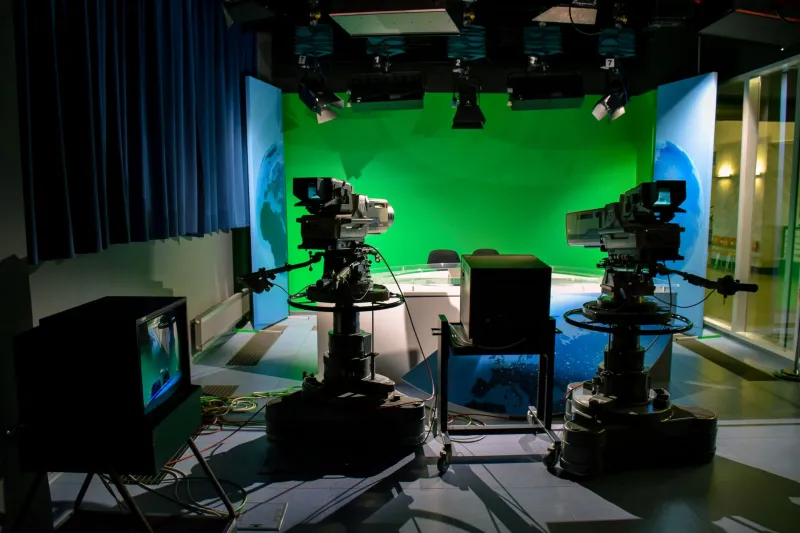
"People stop me at the farmers market," Osei said during a recent conversation at the Princeton TV studios. "They'll say, 'I heard what you said about that last year, and you were right.' That kind of ongoing relationship changes how you approach every single story. You cannot disappear into a broadcast and never be accountable for what you said. I live here. I shop here. My children go to school here."
This geographic and social embeddedness is not incidental to the trust local anchors inspire — it is foundational to it. National television journalists, however talented, are largely insulated from the communities they cover. Their errors rarely follow them to the grocery store. Local anchors do not have that luxury, and many argue they do not want it.
Fact-Checking as Community Service
The mechanics of local journalism's relationship with truth are worth examining in detail. Princeton TV's editorial standards require anchors and reporters to independently verify claims from at least two sources before broadcast, a practice that has remained consistent even as the pace of the broader news cycle has accelerated dramatically.
Anchor and senior correspondent David Ramos, who joined Princeton TV eleven years ago after working briefly for a regional cable outlet, describes the verification process as inseparable from his sense of professional identity. "When I was working at a larger outlet, the pressure to be first was enormous. Here, the pressure is to be right. Those are not always compatible goals, and we have made a deliberate institutional choice about which one matters more."
Ramos points to a specific incident from several years ago when a rumor circulated widely on local social media suggesting that a prominent community institution was facing closure. Rather than rush the story to air, his team spent two additional days confirming details, speaking directly with board members and reviewing financial documents. The story they eventually broadcast was more nuanced and more accurate than anything that had appeared online — and several viewers later told him that the delay itself had been reassuring. "They knew we weren't just amplifying noise," he said.
The Viewer Relationship as Accountability Mechanism
What distinguishes community television journalism from its national counterparts is not merely scale but the nature of the relationship between broadcaster and audience. Princeton TV receives viewer correspondence — letters, emails, and increasingly, direct messages through community channels — at a rate that anchors describe as both humbling and motivating.
Osei estimates that she personally responds to between fifteen and twenty viewer inquiries each week, a practice she considers non-negotiable. "When someone takes the time to write and say they noticed an inconsistency, or they want more context on a story, that deserves a real answer. It also keeps me honest. I know that people are paying attention not just to what I say tonight, but to whether it holds up against what I said six months ago."
This two-way accountability structure has no real equivalent in national broadcasting. A viewer who feels misled by a cable news segment has little recourse beyond changing the channel. A Princeton resident who feels a local story was handled poorly can — and frequently does — raise that concern directly with the anchor responsible. The result, according to multiple longtime viewers interviewed for this article, is a broadcast environment that feels less like a one-way transmission and more like an ongoing civic conversation.
Transparency as Editorial Philosophy
Beyond individual relationships, Princeton TV has developed institutional practices designed to make its editorial process visible to viewers. When a story requires correction, the correction is delivered prominently and in plain language, with an explanation of what went wrong. When a source declines to comment, that refusal is reported explicitly rather than papered over with vague language.
These practices reflect a broader philosophy that transparency is not a concession to criticism but a proactive commitment to the audience. "Viewers are sophisticated," Ramos noted. "They understand that journalism involves uncertainty and evolving information. What they cannot forgive is the pretense that it doesn't. When we show our work — when we explain why we waited on a story, or why we're qualifying a claim — that actually increases trust rather than undermining it."
This approach stands in notable contrast to the confident, declarative style that characterizes much of national cable news, where admitting uncertainty is often framed as weakness. In Princeton, anchors have found that measured, qualified reporting resonates with viewers who have grown weary of false certainty.
A Particular Moment for Local Journalism
The current environment has created conditions in which the deliberate, relationship-centered approach of community television journalism looks less like a quaint artifact of an earlier media era and more like a prescient model. As trust in national media institutions continues to decline across demographic groups, the intimate accountability of local broadcasting has acquired renewed relevance.
For Princeton residents who feel overwhelmed by the volume and velocity of competing claims in the broader information ecosystem, the familiar faces on Princeton TV represent something genuinely valuable: journalists who are answerable to the same community they serve, who have staked their professional reputations on getting things right over the long term, and who will be present in this community long after any individual story has faded from memory.
That kind of trust is not easily quantified. But it is, as many Princeton viewers will attest, unmistakably real — and in the current moment, more necessary than ever.