Nothing Compares to Now: How Live Broadcasting Is Reshaping the Way Princeton Watches Together
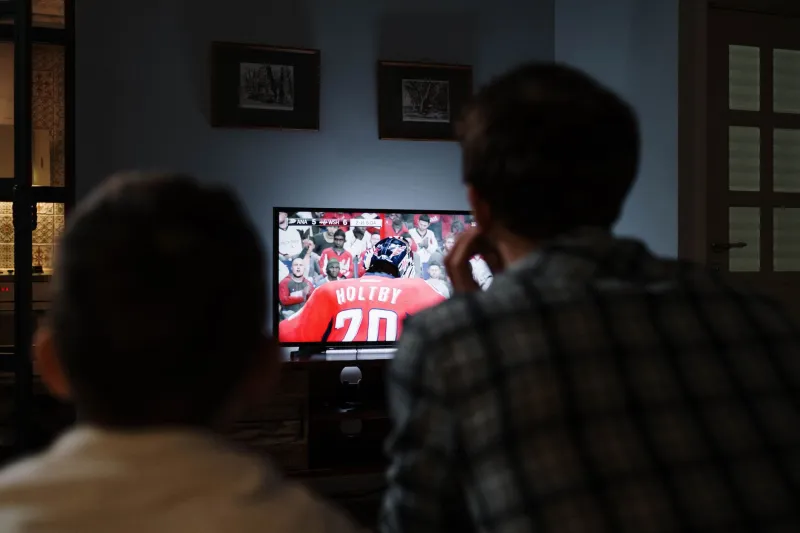
There is a particular kind of attention that settles over a viewer when they know what they are watching is happening at this very moment. No rewind button. No pause. No carefully edited second take. For a growing number of Princeton residents, that feeling — urgent, communal, and wholly unscripted — has become the most compelling reason to tune in to local television.
In an age when virtually every form of entertainment can be consumed on demand, at any hour, on any device, live broadcasting occupies a strangely irreplaceable position. And across Princeton, that position is being felt more acutely than ever.
The Psychology Behind the Pull
Media researchers have long noted that live programming activates a distinct psychological response in audiences. Unlike pre-recorded content, which viewers consume with the implicit understanding that every rough edge has been smoothed away, live television carries genuine stakes. Anything can happen. That uncertainty, far from being a liability, turns out to be one of the medium's most powerful draws.
Dr. Miriam Osei, a communications scholar who has studied community media consumption patterns in the northeastern United States, explains it plainly: "When viewers know a broadcast is live, their engagement increases substantially. There is a social contract being formed in real time. The broadcaster cannot take it back, and the viewer cannot look away."
For Princeton TV, that dynamic plays out across a range of programming — from live coverage of municipal council meetings to real-time broadcasts of local school board sessions and community forums. These are not glamorous productions by any conventional measure. But they draw some of the station's most loyal and attentive audiences.
Town Halls and the Shared Civic Moment
Few formats illustrate the power of live television more clearly than the town hall broadcast. When Princeton residents gather to debate zoning decisions, public safety concerns, or school policy, the presence of a live camera transforms the event from a local meeting into a shared civic moment.
"People call in during the broadcast," says Marcus Delray, a producer who has overseen live coverage at Princeton TV for more than seven years. "They are watching on their televisions, and they are on the phone asking questions, reacting, sometimes disagreeing loudly. That feedback loop doesn't exist with a recorded segment that goes up two days later."
Delray recalls a particularly charged broadcast from a public forum on local transportation infrastructure. The meeting ran well past its scheduled end time, and the crew stayed on air throughout. "We had no idea how it was going to resolve. Neither did anyone watching. That's what made it matter."
For viewers, that shared uncertainty is not incidental — it is the point. When an entire community watches the same moment unfold simultaneously, the experience becomes a kind of collective memory. People reference it afterward. They talk about it at diners, in parking lots, at school pickup. Live television, in this sense, functions as a social adhesive in ways that even the most thoughtfully produced pre-recorded documentary cannot.
Authenticity Over Polish
There is, of course, a trade-off. Live broadcasts stumble. Microphones cut out. Guests speak over one another. A council member loses their place in prepared remarks. And yet, for many Princeton viewers, these imperfections are precisely what lend the medium its credibility.
"I trust what I see on live local television in a way I don't always trust packaged content," says Diane Kowalczyk, a longtime Princeton resident who watches community broadcasts regularly. "When something is edited, you're always aware that someone made choices about what you see and hear. Live television doesn't have that filter. It's just real."
This sentiment surfaces repeatedly among viewers who have returned to local live programming after years of relying primarily on streaming platforms. The curated perfection of algorithm-driven content, they say, has begun to feel hollow. Live local television, by contrast, feels like something genuine is at stake.
Producers at Princeton TV have noticed this shift in audience expectation and have begun leaning into it rather than compensating for it. "We used to be self-conscious about the moments when things didn't go smoothly," admits Carla Whitfield, who produces the station's live local news coverage. "Now we understand that those moments are often when viewers feel most connected. It signals that we're human. That we're here, right now, with them."
The Communal Screen and the Disappearing Algorithm
Streaming platforms are built around individual preference. Their entire architecture is designed to serve a single viewer, anticipating tastes and curating an experience that is, by definition, personalized and private. Live television operates on an entirely different logic. It assumes a shared audience. It presupposes that what is happening right now is significant enough to warrant collective attention.
For Princeton, a community with a strong tradition of civic engagement and public discourse, that assumption resonates deeply. Local live broadcasts create what media scholars sometimes call "appointment viewing" — moments that audiences feel compelled to witness as they happen rather than catch up on later.
"There's a reason people still gather around televisions for live events," observes Dr. Osei. "The Super Bowl, election nights, breaking news — these are moments defined by their simultaneity. Community television can harness that same energy at the local level. A live school board vote is, for the people it affects, every bit as significant as a national election."
What Princeton TV Has Learned
For the team at Princeton TV, years of live production have yielded a set of hard-won insights. Chief among them: preparation matters, but so does the willingness to let go of the script.
"You do everything you can to be ready," says Delray. "But then you have to trust the moment. The best live broadcasts we've done are the ones where something unexpected happened and we stayed present for it."
That philosophy has shaped how the station approaches everything from live call-in programs to coverage of community celebrations and local sporting events. The goal is not to eliminate unpredictability but to meet it with steadiness — to give viewers a stable vantage point from which to experience whatever unfolds.
Whitfield adds that the audience itself has become an increasingly active participant in shaping live broadcasts. Viewer calls, social media responses, and real-time feedback have blurred the line between broadcaster and community in ways that pre-recorded content simply cannot accommodate. "We're not broadcasting to Princeton," she says. "We're broadcasting with Princeton. That distinction matters enormously."
A Medium Built for This Moment
It would be tempting to frame the renewed interest in live local television as a nostalgic impulse — a longing for a simpler media landscape. But the evidence from Princeton suggests something more forward-looking is at work. Viewers are not returning to live programming because they have run out of streaming options. They are choosing it because it offers something those options cannot: the experience of being present, together, for something that is actually happening.
In a media environment that grows more fragmented and individualized with each passing year, that experience has become genuinely rare. And rarity, as any economist will confirm, has a way of increasing value.
For Princeton TV, the lesson is clear. Live broadcasting is not a legacy format waiting to be retired. It is, if anything, the medium best suited to the community's hunger for authentic, shared experience. The cameras are rolling. The moment is now. And increasingly, Princeton is watching.