Mending What Was Broken: How Community Television Quietly Became Princeton's Most Unlikely Peacemaker
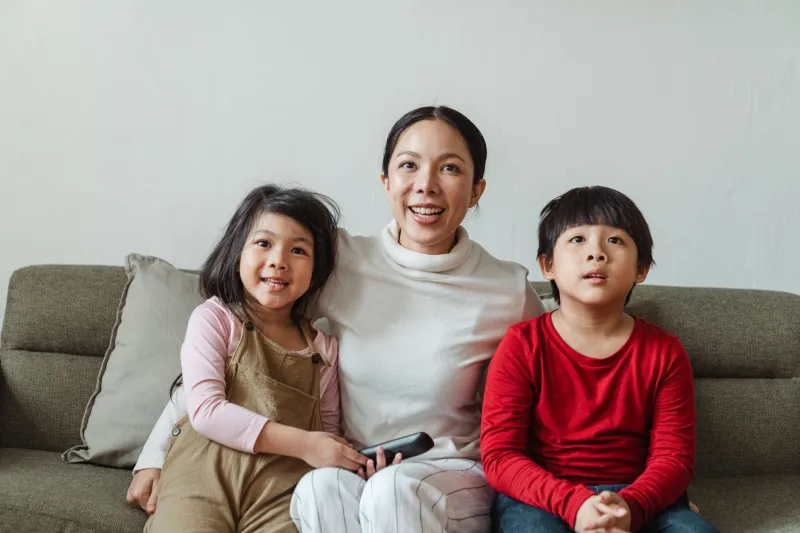
There is a particular kind of silence that settles over a living room when a familiar face appears on screen—not a celebrity, not a fictional character, but someone you once loved and stopped speaking to years ago. For several Princeton residents, that moment did not unfold during a private viewing. It happened live, in front of neighbors, friends, and the quiet machinery of community broadcasting.
Princeton TV has long positioned itself as a platform for local voices. What its founders perhaps did not anticipate was that those voices would sometimes carry the weight of personal history—of family ruptures, generational disagreements, and the particular grief that accompanies estrangement from one's own kin.
A Stage No One Expected to Need
Margaret Holloway, a retired schoolteacher who has lived in Princeton for more than three decades, describes the evening she watched her adult son appear in a Princeton TV panel discussion on housing affordability as "the strangest gift I never asked for." The two had not spoken in nearly four years following a dispute over a family property matter. She had tuned in, she admits, largely out of habit.
"I wasn't prepared to see him," she says. "He was thoughtful. He was measured. He talked about community in a way I recognized from when he was young. Something in me just—softened."
She wrote him a letter that week. He called. They have since met for dinner on three occasions.
Holloway is careful not to overstate the role of local television in what remains a fragile reconciliation. Yet she credits the broadcast with giving her a context for her son that their personal conflict had obscured. "When you're arguing with someone, you stop seeing the whole person. Watching him on television—being seen by his community—reminded me of who he actually is."
Intergenerational Conversations the Dinner Table Could Not Hold
The dynamics Holloway describes are not unique to her family. Community media scholars have long noted that local programming occupies a distinctive psychological space—it is simultaneously familiar and public, personal and communal. Unlike social media, where individuals curate carefully constructed identities, community television tends to present its subjects in unguarded, contextual ways.
Dr. Anita Ferreira, who teaches media studies at a nearby institution and has consulted with Princeton TV on several documentary projects, suggests this quality is precisely what makes local broadcasting so unexpectedly effective as a bridge between divided parties.
"Algorithmic platforms are designed to reinforce your existing emotional state," she explains. "They learn what agitates you and serve more of it. Community television doesn't have that mechanism. It simply shows you people in your neighborhood doing and saying things. That neutrality can be disarming in ways that a direct conversation sometimes cannot."
For the Okafor family—whose name has been changed at their request—a Princeton TV documentary on immigrant entrepreneurship became the unlikely starting point for a conversation between a father and his college-aged daughter that had stalled for years over questions of cultural expectation and personal ambition. The father, who had participated in the documentary, watched it alongside his daughter at her suggestion.
"She wanted me to see myself from the outside," he recalls. "I think she thought it would help me understand why she felt so much pressure. And she was right. I saw things in that program I had never said out loud before—about sacrifice, about what I wanted for her. It opened a door."
The Role of Witnessing
What distinguishes these accounts from more conventional narratives of reconciliation is the presence of a third party: the audience. Princeton TV broadcasts to a community of viewers who are themselves neighbors, colleagues, and acquaintances of the people on screen. This shared witnessing appears to carry its own quiet authority.
Several residents interviewed for this article noted that seeing a family member acknowledged and respected by the broader community shifted their private perception of that individual. The public dimension, rather than complicating the personal, seemed in these cases to clarify it.
James Whitfield, a Princeton resident and occasional volunteer producer at Princeton TV, has observed this phenomenon from the production side. "We've had people come up to us after a broadcast and say that watching a segment about their neighborhood changed how they thought about someone they'd written off," he says. "That's not something we planned for. It just happens when you put real people in front of a camera and let them speak honestly."
Whitfield recalls one particular instance in which two brothers—estranged following a dispute over their late mother's estate—both appeared, unknowingly, in separate segments of a locally produced oral history program. When the episode aired, a mutual friend alerted them both. The coincidence prompted a phone call between the brothers that, by their own account, broke a silence of more than six years.
"We didn't engineer that," Whitfield says. "But I'd like to think the show created the conditions for it."
What Streaming Cannot Replicate
The contrast with dominant streaming platforms is worth examining directly. Services built on algorithmic recommendation are extraordinarily effective at delivering content calibrated to individual preference—but that calibration tends to narrow rather than expand a viewer's sense of the world around them. A person who has grown distant from a family member is unlikely to encounter content that challenges that distance or reframes their understanding of the other party.
Community television operates on an entirely different logic. Its programming is determined not by behavioral data but by the composition of the community itself. A viewer may encounter a story about someone they know, someone they once knew, or someone whose experience unexpectedly mirrors their own. That encounter is not engineered—it is simply the result of a local broadcaster doing its job.
Dr. Ferreira frames this distinction in terms of what she calls "ambient familiarity." "When you watch a platform like Netflix, you are essentially alone with content designed for you," she says. "When you watch community television, you are part of an audience that shares a geography, a history, and a set of common references. That shared context is the medium, in a very real sense."
A Quiet Mission
Princeton TV has never formally positioned itself as a vehicle for family reconciliation. Its mission is, at its core, to document and amplify the stories of its community. But the accounts gathered here suggest that this mission carries consequences its producers may not always anticipate.
In a media environment increasingly defined by personalization, filter bubbles, and the frictionless delivery of preferred perspectives, there is something quietly radical about a broadcast that simply shows you your neighbor—or your estranged sibling, or your adult child—as they are seen by the people around them.
For Margaret Holloway, that is more than enough. "I'm not saying television fixed my family," she says carefully. "We have a long way to go. But it reminded me that he's still out there, still part of this community, still someone worth knowing. Sometimes that's where it has to start."