From the Vault to the Living Room: How Princeton Families Are Raising the Next Generation on Local Broadcast Classics
There is a particular kind of quiet that settles over a household when a parent reaches for something old. Not old in the way of a Hollywood film from a previous decade, with its polished cinematography and professional score, but old in the way of a home movie — imperfect, unhurried, and unmistakably real. For a growing number of Princeton families, that something old is community television.
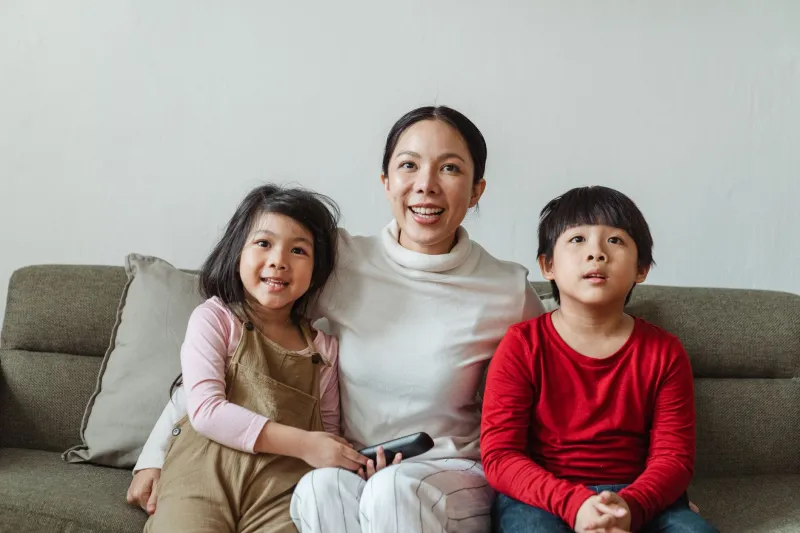
Princeton TV's archive of local programming, spanning several decades of neighborhood coverage, school board meetings, cultural festivals, and youth sporting events, has quietly become one of the most unusual parenting resources in the region. Parents who grew up watching these broadcasts are now sitting beside their own children and pressing play.
A Different Kind of Screen Time
The conversation around children and screens has, for years, centered on moderation and content quality. Parents are advised to be selective, to favor educational programming, to monitor what their children absorb. What that conversation rarely addresses is the question of origin — not merely what a child watches, but where that content comes from and what world it reflects.
Commercial streaming platforms offer abundance. They offer variety, algorithmic personalization, and productions made with resources that community television could never match. What they do not offer is Princeton. They do not offer footage of the town's own neighborhoods filmed thirty years ago, or interviews with residents whose grandchildren may now be sitting in the same schools, or coverage of a community harvest fair held on a block that a child walks past every single morning.
That specificity, parents report, is precisely the point.
"My daughter kept asking me what things looked like when I was little," said one parent who has been curating a personal playlist of archived Princeton TV segments for her seven-year-old. "I could describe it, or I could show her. The difference is enormous. She watches these old programs and she recognizes streets, she recognizes the park. It becomes real to her in a way that my words never could."
What the Archives Actually Contain
The depth of Princeton TV's broadcast library is, to those unfamiliar with it, genuinely surprising. Community television stations have long operated on the premise that local life deserves documentation, and Princeton's programming history reflects that commitment with considerable breadth.
Among the archived material: coverage of school productions and athletic competitions from eras when the participants are now middle-aged adults; neighborhood profiles that captured the character of specific streets before development altered them; holiday programming that documented cultural traditions brought to Princeton by waves of immigrant families; and interview segments with longtime residents whose perspectives on the community's growth remain, in retrospect, remarkably prescient.
For new parents, many of whom arrived in Princeton after some of this footage was recorded, the archives function as an orientation. For those who grew up here, they function as something closer to a mirror — one held up to a version of the community they inhabited before they fully understood it.
The Authenticity That Production Budgets Cannot Buy
There is a school of thought, increasingly common among media educators, that the production limitations of community television are not liabilities but assets. The absence of professional lighting, the occasional stumble over a scripted introduction, the visible nervousness of a local resident speaking on camera for the first time — these qualities communicate something that high-production content deliberately edits out: the texture of ordinary life.
Children, developmental researchers have long noted, are perceptive readers of authenticity. They respond to content that feels genuine, and they develop a sophisticated, if unarticulated, sense of when they are being performed at rather than included in something real.
Vintage Princeton TV programming offers the latter. A segment filmed at a local school in the 1990s does not look like a commercial for childhood. It looks like childhood — awkward, animated, and completely unaware of how it will appear to viewers watching it decades later. That unselfconsciousness is, paradoxically, one of its most powerful qualities.
"There's nothing curated about it," observed one Princeton parent who works in education. "When my son watches those old segments, he's not watching someone's idea of what a community should look like. He's watching what it actually looked like. That's an incredibly rare thing to be able to offer a child."
A Record of How the Community Has Changed
Beyond their value as entertainment or as windows into personal family history, the archived broadcasts serve a documentary function that becomes more significant with each passing year. Princeton, like any American community, has undergone substantial transformation across the decades captured in the archive. Businesses have opened and closed. Demographic patterns have shifted. Buildings have been demolished and constructed. Traditions have faded and new ones have emerged in their place.
Watching old programming with young children creates natural opportunities for the kind of historical conversation that textbooks rarely prompt. When a child notices that a familiar intersection looked entirely different forty years ago, or that a cultural event they have never heard of once drew hundreds of neighbors to a local park, questions follow. And questions, parents and educators alike would agree, are precisely where meaningful learning begins.
Some families have begun treating the archive as a deliberate educational supplement — not a replacement for conventional history instruction, but a complement to it. Local history, they argue, is history that children can touch. It is history that exists on streets they know and in buildings they can visit. Community television, when it has been carefully preserved, makes that history visible.
Preserving the Impulse to Document
There is, embedded in this trend, a quiet argument for the continued importance of community media. If the broadcasts that Princeton parents are now sharing with their children are valuable precisely because someone thought to make them, then the implication is clear: the community programming being produced today will be equally valuable to the parents and children of forty years from now.
The families gathering around archived Princeton TV segments are not merely consuming history. They are, in the act of valuing that history, making a case for its continued creation. Every local segment produced today, every neighborhood profile and school event and community conversation captured on camera, is a potential artifact for a future parent who will want to show their child what Princeton once looked like.
The archive grows because the community continues to document itself. And the community continues to document itself, in part, because families keep returning to what the archive already holds — and finding, in those old broadcasts, something they did not expect to find: themselves.