Raising Citizens, Not Just Viewers: A Parent's Guide to Using Local Television as a Civics Classroom
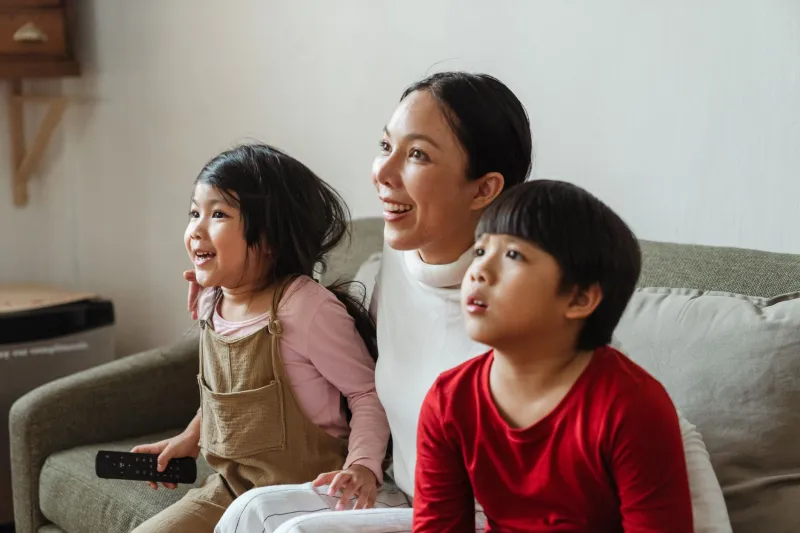
Civics education in the United States has faced a quiet crisis for years. Studies consistently show that young Americans enter adulthood with limited understanding of how local government operates, where municipal decisions originate, and what participation in community life actually looks like in practice. Textbooks can describe the structure of a town council; they cannot replicate the experience of watching one in action.
For families in the Princeton area, that experience is available in the living room. Princeton TV's programming — from coverage of local government proceedings to community issue documentaries and neighborhood profiles — provides a window into civic life that no classroom exercise can fully approximate. The question for parents is not whether the content is there. It is how to use it well.
Why Local Television Works Where Textbooks Fall Short
Abstract civic knowledge — the kind acquired through memorizing the three branches of government or identifying the responsibilities of a county commissioner — does not reliably translate into civic engagement. Research in education consistently finds that children develop lasting civic values not through information alone, but through connection: seeing people they recognize navigate real problems in real places.
Local television creates that connection in ways that national media cannot. When a child watches a Princeton TV segment about a proposed change to a neighborhood park, or sees a local business owner discuss the impact of a zoning decision, the subject matter is no longer theoretical. The civic process becomes something that happens to people they might know, on streets they travel, in institutions that affect their daily lives.
Dr. Patricia Holloway, an education specialist who has worked with school districts across New Jersey, describes this as the "proximity principle" in civic education. "Children engage more deeply with content that feels personally relevant," she explains. "Local media provides that relevance automatically, in a way that national programming simply cannot replicate for most young viewers."
Choosing the Right Content for the Right Age
Not all of Princeton TV's programming is equally suited to every age group, and thoughtful curation makes a significant difference in how effectively viewing translates into learning.
For younger children, ages five through eight, the most accessible entry points are community spotlight segments and human-interest stories that center on recognizable figures — local teachers, business owners, first responders, and neighborhood volunteers. These segments introduce the idea that community life is maintained by real people making active choices, without requiring children to process complex procedural information.
Children between the ages of nine and twelve are generally ready to engage with more substantive content. Coverage of school board meetings, local planning decisions, and community debates about infrastructure or public services can prompt meaningful discussion about how competing interests are balanced in a democratic system. Parents should preview this content before viewing together and prepare a few guiding questions to anchor the conversation.
Adolescents, particularly those in middle and high school, benefit from exposure to Princeton TV's more investigative programming. Segments that examine municipal budgeting, local electoral processes, or community responses to policy changes provide material that connects directly to the civics curriculum they are encountering in school — and gives that curriculum a living, local dimension.
Structuring the Conversation
Viewing alone is not sufficient. The research on media literacy and civic education is consistent on this point: what children take from what they watch is shaped almost entirely by the conversations that follow. Parents need not be policy experts to facilitate these discussions. They need only be willing to ask genuine questions and model the kind of reflective engagement they hope to cultivate.
Several frameworks have proven effective for post-viewing conversations:
The "Who Decides" Framework: After watching a segment about a local issue, ask your child who appeared to be making the decisions discussed in the story. Who was affected by those decisions? Who had a voice in the process, and who did not? This framework introduces children to the concepts of representation and accountability without requiring abstract explanation.
The "What Would You Do" Framework: Present your child with the central dilemma featured in a segment and ask how they would approach it if they were responsible for the decision. This exercise develops the habit of considering multiple perspectives and thinking through the consequences of civic choices.
The "Why Does It Matter" Framework: Ask your child to explain, in their own words, why the issue covered in a segment is important to the community. This question encourages children to connect local events to broader values — fairness, safety, shared resources, and community well-being — that underpin civic life.
Making It a Habit, Not an Event
The families in the Princeton area who report the most meaningful results from intentional local television viewing share a common characteristic: they treat it as a routine rather than an occasional exercise. Civic education, like most forms of learning, benefits from repetition and continuity.
Setting aside a regular viewing time — even thirty minutes once a week — and coupling it with a consistent post-viewing conversation creates the kind of cumulative exposure that builds genuine civic literacy over time. Several Princeton-area parents interviewed for this piece described the practice as having transformed their children's relationship to the community itself.
"My daughter started asking questions about who our town council members were after we watched a segment together," recalled one parent from the Princeton area. "A few months later, she wanted to attend a council meeting in person. That would not have happened without the television conversation starting it."
Extending the Lesson Beyond the Screen
The most effective use of Princeton TV as a civic education tool does not end when the television is switched off. Parents who connect on-screen content to real-world participation amplify the educational impact considerably.
Attending a local government meeting after watching coverage of the same body on Princeton TV gives children a firsthand understanding of how those proceedings actually function. Visiting a community organization featured in a neighborhood spotlight makes the abstract concept of civic volunteerism concrete and accessible. Writing a letter to a local official about an issue covered in a segment introduces children to the mechanics of democratic participation at the most accessible level.
Princeton TV's programming is, in this sense, a starting point rather than a destination. It opens doors that parents and children can choose to walk through together — into the civic life of a community that is, in every meaningful sense, their own.
The screens in our living rooms have always had the potential to connect us to something larger than ourselves. The question is whether we are intentional enough to let them.