What Children Learn When the Screen Knows Their Neighborhood
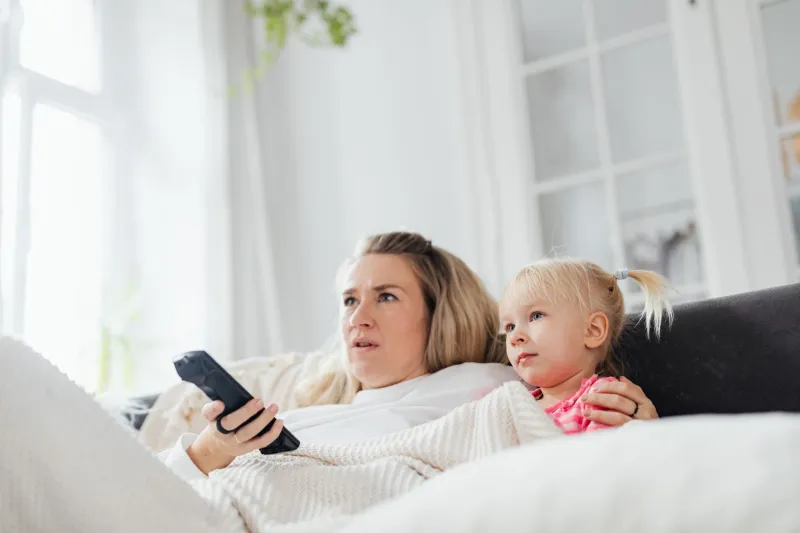
For most children growing up in the United States today, the television screen is less a window into the world than a mirror reflecting their own preferences back at them. Recommendation engines study viewing habits, optimize for retention, and deliver content calibrated to hold attention rather than expand it. The result, according to a growing body of research in developmental psychology, is a media diet that is simultaneously abundant and narrow.
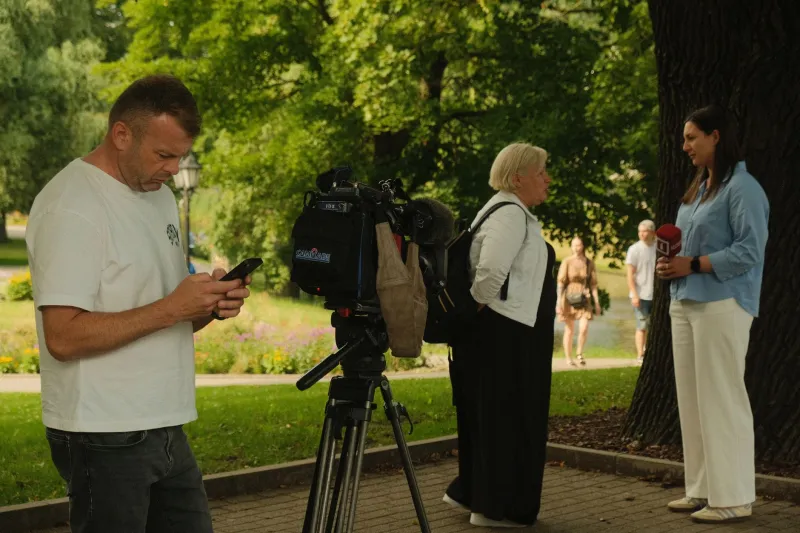
Local broadcasting operates on an entirely different logic. When a child watches a segment about the Princeton Board of Education debating school calendar changes, or sees a neighbor interviewed about a proposed zoning ordinance, something qualitatively different occurs. The content is not selected because an algorithm determined it would be engaging. It is present because it is consequential — because it describes the actual world in which that child lives.
That distinction, researchers argue, may carry significant developmental weight.
The Civic Imagination Begins at Home
Dr. Sandra Okafor, a developmental psychologist at a mid-Atlantic research university who has studied media consumption patterns in children aged six through fourteen, describes what she calls the "proximity effect" in civic learning. "Children develop civic awareness most readily when they can connect abstract concepts — voting, taxation, public safety — to environments they already understand," she explains. "A story about a local town council is not just news. For a child, it is a map of how power actually works in their daily life."
This stands in contrast to nationally distributed content, which, even when civically oriented, tends to present political and social structures at a scale that young viewers find difficult to internalize. A congressional hearing in Washington, D.C., carries little felt meaning for a ten-year-old in New Jersey. A debate over whether Princeton's community center should extend its evening hours is, by comparison, immediately legible.
Educators in the Princeton area have begun to notice this distinction in their classrooms. Margaret Holloway, who teaches fifth-grade social studies at a local elementary school, began incorporating Princeton TV segments into her weekly instruction two years ago. "What I found almost immediately was that students had opinions," she says. "Real, specific opinions — not just the vague sense that 'government is important.' They could name people. They could describe decisions. They started asking whether they could do anything about the things they were seeing."
That shift from passive observation to active inquiry is precisely what developmental researchers identify as a precursor to lifelong civic participation.
Attention, Complexity, and the Architecture of Local Storytelling
Beyond civic content specifically, the structural qualities of community television programming appear to offer developmental advantages that algorithm-driven platforms do not.
Research on children's media consumption has consistently found that short-form, rapidly edited content — the dominant format on most digital platforms — correlates with decreased sustained attention and reduced tolerance for narrative complexity. Community television, by contrast, tends to feature longer segments, extended interviews, and stories that unfold across multiple episodes or broadcasts. A local documentary about Princeton's history, for instance, requires a viewer to hold context, track multiple perspectives, and follow a line of reasoning across time.
"That kind of cognitive engagement is not incidental," says Dr. Okafor. "It is practice. Children who regularly encounter complex narratives — even in relatively modest forms — develop stronger working memory and greater capacity for perspective-taking. Those are not trivial skills. They are foundational to everything from academic performance to interpersonal relationships."
Perspective-taking, in particular, emerges as a recurring theme in discussions of what makes locally produced content distinctive. When a Princeton TV reporter interviews a small business owner, a school principal, a longtime resident, and a recent transplant about the same neighborhood issue, children watching are exposed to the idea that a single situation can be understood in multiple legitimate ways. This is not a lesson that autoplay queues are designed to teach.
Social Responsibility and the Recognition of Real Stakes
There is a further dimension to the Princeton TV effect that educators find especially striking: the way local broadcasting cultivates a sense of social responsibility in young viewers by making the stakes of civic life visible and personal.
Nationally distributed news, when it reaches children at all, tends to present issues at a scale that can feel either overwhelming or irrelevant. Climate change, federal budget negotiations, international conflict — these are not subjects that invite a child's sense of agency. Local programming, by contrast, consistently presents problems that are solvable, decisions that are reversible, and outcomes that depend, in part, on what community members choose to do.
"I had a student watch a Princeton TV segment about a local food pantry that was running low on donations," recalls Holloway. "By the end of the week, she had organized a collection drive in our classroom. She had not been assigned that task. She had simply seen something real, understood that it mattered, and decided to act." That sequence — awareness, comprehension, agency — is the developmental arc that civic educators spend careers trying to cultivate. Community television, it appears, can compress it considerably.
What Parents and Educators Can Do
The research does not suggest that children should be shielded from all digital content or that national broadcasting is without value. It does suggest that a media diet composed exclusively of algorithm-selected material may leave meaningful developmental gaps — gaps that locally produced programming is particularly well-positioned to fill.
For parents in the Princeton area, the practical implication is straightforward: watching Princeton TV with children, and taking a few minutes afterward to discuss what was seen, can meaningfully extend the educational value of the broadcast. Questions as simple as "Did you know that was happening in our town?" or "What do you think should happen next?" can transform passive viewing into active civic learning.
For educators, the opportunity is equally accessible. Princeton TV's archive of local programming represents a ready-made curriculum resource — one grounded not in hypothetical examples but in the actual life of the community in which students live.
A Screen That Speaks to Where You Are
The broader argument implicit in this research is not complicated. Children learn best when the material they encounter is connected to a world they recognize and can act upon. Algorithm-driven content is, by design, optimized for the individual viewer's existing preferences. Community television is, by design, optimized for the community's shared reality.
Those are not equivalent educational environments. And as researchers, educators, and parents in Princeton are beginning to recognize, the difference between them may show up not just in what children know, but in who they become.