More Than a Messenger: How Princeton's Local TV Hosts Earn a Place at the Family Table
There is a moment that Janet Holloway, a retired schoolteacher who has lived in Princeton for over three decades, describes with unexpected emotion. It was the morning after a severe ice storm had paralyzed the region. Schools were closed, roads were impassable, and her elderly mother was stranded across town. Before she called a neighbor, before she reached out to family, she turned on Princeton TV.
"I needed to hear a voice I recognized," she says. "Not a national anchor reading from a prompter somewhere else. I needed someone who knew which roads were ours, which shelters were open, and who understood what that storm actually meant to people living here."
What Janet was reaching for is something researchers in media psychology have studied for years but communities have understood intuitively for much longer. Local television hosts occupy a singular space in the social fabric of a town. They are not merely news readers. Over time, through repetition, familiarity, and shared experience, they become something closer to trusted advisors—figures whose presence carries the weight of a relationship, even when that relationship flows in only one direction.
The Science Behind the Screen
Psychologists refer to this phenomenon as a parasocial relationship: a one-sided emotional connection that viewers develop with media personalities. While the term might suggest something trivial or even illusory, the bonds formed through local television are anything but superficial. Unlike national anchors who appear on screens across millions of anonymous households, local hosts are embedded in the same community as their viewers. They shop at the same grocery stores. Their children attend the same schools. They appear at the same town festivals and memorial services.
This proximity transforms the parasocial into something far more reciprocal. When a Princeton TV host mentions road closures on Nassau Street or covers a zoning dispute that affects a specific neighborhood, viewers recognize that the person speaking genuinely understands the stakes. That recognition builds trust in a way that no amount of production value or national prestige can replicate.
Dr. Marcus Webb, a communications scholar who has consulted with regional broadcasters across the Northeast, explains it plainly. "The national anchor is a voice from somewhere else," he notes. "The local host is a voice from the same place you are. That geographical and cultural alignment creates a credibility that is almost impossible to artificially construct."
Rituals and Recognition
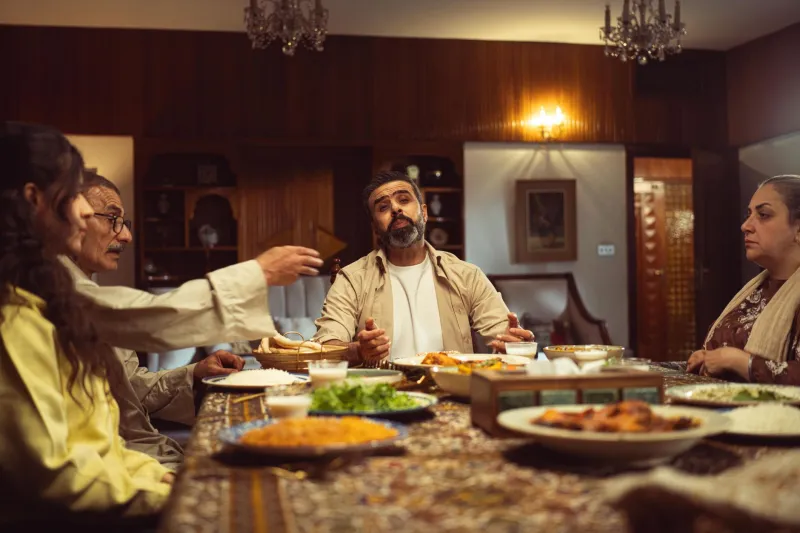
For many Princeton families, local television is woven into the rhythms of daily life in ways that go well beyond information consumption. Morning programs are background companions during breakfast. Evening newscasts serve as a shared transition between the workday and the hours that follow. Over months and years, the faces and voices on screen become as familiar as those of colleagues or distant relatives.
Marco and Diane Ferreira, who have raised four children in Princeton over the past twenty years, describe this familiarity with striking clarity. Their youngest daughter, now in college, grew up watching a particular weekend morning show hosted by a Princeton TV personality who has been on air for nearly fifteen years. "She used to talk about him like he was someone she actually knew," Diane recalls. "When he mentioned that his own kids were nervous about standardized testing, she turned to us and said, 'See, even his family gets it.' That connection was real to her."
Those moments of perceived intimacy accumulate over time. A host who shares a personal anecdote, acknowledges a community loss, or simply remembers to mention a local event that matters to a specific neighborhood is doing something that algorithms and aggregation platforms cannot do. They are demonstrating that they belong to the same community they are addressing.
Crisis, Comfort, and Credibility
Perhaps nowhere is the trusted-advisor dynamic more apparent than during moments of community crisis. Princeton, like any American town, has experienced its share of difficult episodes—severe weather events, public health scares, local tragedies that leave residents searching for both information and reassurance. In those moments, the question of who to turn to becomes urgent.
Longtime Princeton TV anchor Patricia Crane, who has been with the station for over a decade, reflects on this responsibility with evident care. "When something serious happens, people are not just looking for facts," she says. "They are looking for someone who can hold steady while they process what is happening. I think local anchors earn that role not through any single broadcast but through years of showing up—of being consistent, being honest, and being present for both the ordinary and the extraordinary."
Patricia recalls covering a local flooding event several years ago that displaced dozens of families. In the days that followed, she received letters and messages from viewers who said her coverage had helped them feel less alone. "One woman told me she kept the television on through the night not for the updates but for the company," Patricia says. "That stayed with me. It reminded me that what we do here is about more than information."
Why National Media Cannot Fill This Role
The distinction between local and national media is not simply a matter of geography. It is a matter of investment. National broadcasters, by necessity, operate at a scale that precludes genuine community embeddedness. Their anchors may be polished, authoritative, and deeply professional, but they cannot know the particular anxieties of a Princeton neighborhood, the history of a local institution, or the faces behind a story that has unfolded over years rather than hours.
Local hosts, by contrast, accumulate what might be called community capital—an understanding of place, history, and relationship that makes their presence meaningful in a way that transcends the broadcast itself. Viewers who have watched the same anchor navigate their town's stories across a decade are not simply consuming content. They are participating in a shared civic narrative.
This is why, even as streaming platforms and social media compete aggressively for attention, local television retains a loyalty that many industry observers find remarkable. A 2023 survey by a regional media research group found that viewers over the age of thirty-five were significantly more likely to describe their local television host as "trustworthy" than any national media figure—regardless of political affiliation or media consumption habits.
A Responsibility Worn Lightly
For the hosts themselves, the weight of this trust is something they carry with a mixture of pride and humility. Princeton TV's own personalities speak frequently about the obligation they feel to earn that trust anew with each broadcast—to resist the temptation of sensationalism, to prioritize accuracy over speed, and to remember that the people watching are neighbors, not an abstract audience.
"I never take it for granted that someone has chosen to spend their morning with us," says one longtime Princeton TV host who has anchored the station's morning programming for eight years. "That is a genuinely generous act on their part. The least we can do is be worthy of it."
In a media landscape increasingly defined by noise, fragmentation, and the erosion of shared reference points, that quiet worthiness may be the most valuable thing local television offers. It is not spectacle. It is not novelty. It is the steady, familiar presence of someone who knows your town, respects your community, and shows up—day after day—to prove it.