Where Neighbors Agree: How Hyperlocal Reporting Is Rebuilding the Lost Art of Family Debate
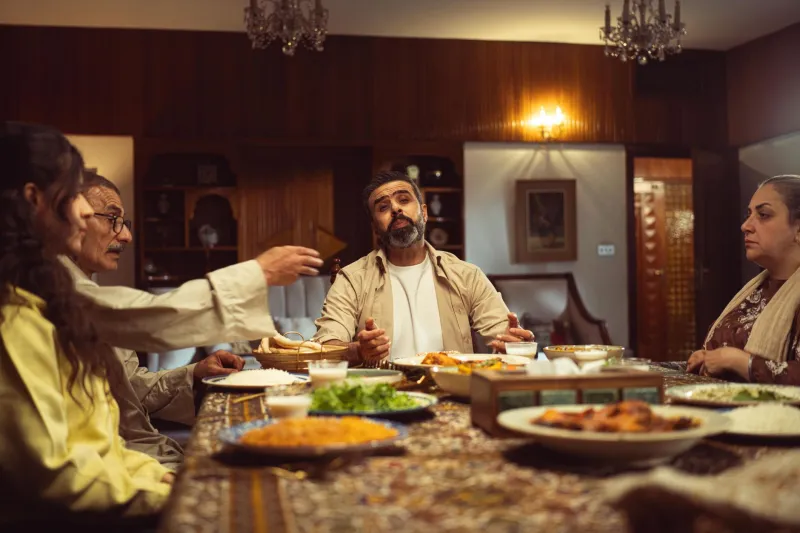
For several years, the Okonkwo household on Witherspoon Street operated by an unspoken rule: national politics stayed off the dinner table. The subject had fractured too many Sunday evenings, leaving the family — three generations living under one roof — in a silence that felt heavier than any argument. Then, last autumn, a Princeton TV segment on proposed changes to the local school district's curriculum calendar changed something.
"We all watched it together, almost by accident," recalls Margaret Okonkwo, 58, a retired school administrator. "And suddenly everyone had something to say — my son, my mother, even my teenage granddaughter. We talked for an hour. Nobody stormed off."
The Okonkwos are not alone. Across Princeton, families that had quietly declared a ceasefire on political discourse are reporting a tentative, sometimes surprising return to substantive conversation — and many of them credit it to the kind of granular, community-specific reporting that Princeton TV has long championed.
The Problem With the National Lens
Political scientists and sociologists have documented what most American families have experienced firsthand: national political discourse has grown so polarized that even casual references to federal policy can ignite deeply personal conflict. Cable news cycles, algorithmically curated social media feeds, and the sheer volume of national commentary have left many households feeling that political conversation is simply not worth the cost.
But local issues operate by different rules. A rezoning proposal on Nassau Street, a debate over the municipal composting program, a contested vote on school library resources — these are matters that touch daily life in ways that resist easy ideological sorting. They demand specificity. They reward local knowledge. And they tend to generate more heat from genuine concern than from partisan reflex.
Princeton TV's editorial philosophy has long recognized this distinction. By maintaining consistent, detailed coverage of borough council sessions, school board deliberations, and neighborhood association meetings, the station provides its viewers with the raw material for exactly the kind of grounded, evidence-based conversation that national news increasingly fails to support.
Common Ground in Shared ZIP Codes
David Ferrara, a 34-year-old software engineer who describes his political views as "pretty progressive," sits across the ideological spectrum from his father, a retired contractor who votes reliably Republican. The two had, by mutual agreement, stopped discussing anything more politically charged than the weather.
That changed when Princeton TV aired an extended report on the proposed redesign of a local intersection — a project that divided residents along lines that had nothing to do with party affiliation and everything to do with pedestrian safety, traffic flow, and the character of the neighborhood.
"My dad has strong opinions about infrastructure," Ferrara says, with a laugh that suggests equal parts exasperation and affection. "And so do I, as it turns out. We disagreed on the solution, but we were working from the same set of facts, talking about the same streets we both drive every day. It felt like a real conversation."
This pattern — ideological opponents discovering shared stakes in local outcomes — emerges repeatedly in conversations with Princeton families. The specificity of hyperlocal reporting seems to function as a kind of common language, one that sidesteps the tribal signaling that has come to define national political exchange.
Younger Voices at the Table
Perhaps the most unexpected beneficiaries of this dynamic are the youngest members of Princeton households. Teenagers and young adults, often assumed to be disengaged from civic affairs or consumed entirely by national and global causes, are proving to be surprisingly attentive to local coverage — particularly when it intersects with issues that affect their immediate environment.
Sophia Brennan, 17, a junior at Princeton High School, began watching Princeton TV segments on school board meetings after her older sister mentioned a debate over extracurricular funding. What started as casual viewing has become, in her words, "genuinely interesting."
"The stuff they cover actually affects my school, my neighborhood," she says. "It's not abstract. And when I bring it up at dinner, my grandparents actually know what I'm talking about. We're all watching the same thing."
Her grandmother, Eleanor Brennan, 74, describes the shift with quiet satisfaction. "For a long time, I felt like we were living in different worlds. Now at least we're living in the same town again, if that makes sense."
It makes considerable sense. Intergenerational connection, researchers suggest, is often most durable when it is rooted in shared physical space and shared local experience. Community television, by its very nature, is designed to cultivate exactly that kind of connection.
The Role of Measured, Accountable Reporting
Not every local outlet is equipped to perform this function. Sensationalism, even at the community level, can replicate the same divisive dynamics that make national news so corrosive to civil conversation. What distinguishes Princeton TV's coverage, according to several of the families interviewed for this article, is its commitment to presenting municipal issues with patience and context rather than manufactured urgency.
"They don't tell you what to think," says Marcus Webb, 46, a local business owner who describes himself as politically independent. "They show you the meeting. They interview the people on both sides. They let you form your own opinion. That's actually pretty rare now."
This approach — methodical, fair, and deeply rooted in the community it serves — creates a foundation of shared information that is essential to productive disagreement. Families cannot debate meaningfully if they are drawing from incompatible information sources. Local television, particularly when it adheres to rigorous standards of balance and accuracy, offers something increasingly scarce: a common factual baseline.
What Comes After the Conversation
For some Princeton families, the conversations sparked by local news coverage have extended well beyond the dinner table. Margaret Okonkwo attended a school board public comment session for the first time in years, accompanied by her granddaughter. David Ferrara and his father submitted a joint letter to the borough council regarding the intersection redesign. Sophia Brennan joined a student advisory committee on school programming.
These are not dramatic political transformations. They are, rather, the quiet, incremental expressions of civic engagement that community television has always sought to encourage — not by telling residents what to believe, but by reminding them that what happens in their town matters, and that they have both the standing and the responsibility to participate.
In a media environment that often seems designed to divide, Princeton TV's most meaningful contribution may be this: the restoration of a shared local reality around which neighbors — and families — can gather, disagree respectfully, and find their way toward something resembling common purpose.
The dinner table, it turns out, was never really the problem. It was always just waiting for the right conversation to come home.