From the Living Room to the Dinner Table: How Princeton TV Stories Become Family Conversations
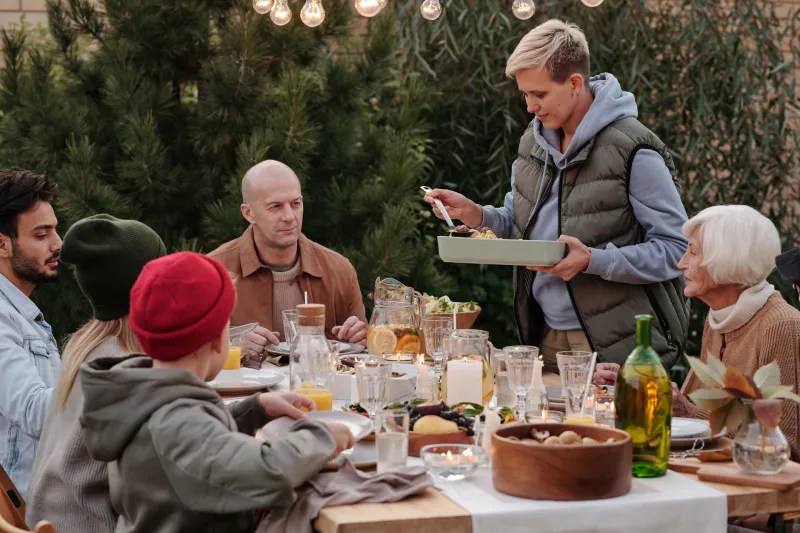
There is a particular kind of conversation that happens in Princeton households after the evening broadcast concludes. The television goes quiet, the family moves to the kitchen, and someone — often a grandparent or a teenager, rarely the person in between — says, Did you see that piece tonight? What follows is rarely brief.
For decades, national media critics have debated whether television unites or divides American families. In Princeton, however, a quieter and more instructive phenomenon has been unfolding in dining rooms and around kitchen tables: local programming, precisely because of its proximity, has become one of the most reliable engines of intergenerational dialogue that many families here have ever known.
The Power of the Familiar Name
National news can feel abstract. A story about municipal infrastructure in a distant city, however well reported, rarely compels a twelve-year-old to ask a grandparent for their opinion. But when Princeton TV airs a segment about a beloved neighborhood business facing closure, or a profile of a longtime crossing guard who has watched three generations of the same family walk to school, the dynamic shifts entirely.
"My grandmother had opinions about everything on that broadcast," recalls Marcus Ellison, a 34-year-old Princeton native who now lives two blocks from the house where he grew up. "She knew the people being interviewed. She had history with some of them. When we watched together, she wasn't just a viewer — she was a participant. And I learned more about this community from those conversations than I ever did in a classroom."
This sense of personal stakes is not incidental. It is, in many ways, the defining advantage of community television over its national counterparts. When the subject of a news story shares your zip code, the story is no longer something that happens to someone else.
What Sticks Across Generations
In the course of reporting this piece, Princeton TV spoke with families spanning three and four generations of local residency. The stories that most consistently surfaced as dinner table touchstones were not the dramatic or controversial ones — though those certainly generated conversation. More often, it was the quieter, more character-driven profiles that left lasting impressions.
The Okafor family, who have lived in Princeton for over forty years, remember a segment from the early 2000s about a local teacher who had quietly mentored hundreds of students over a thirty-year career. "My mother cried watching it," says Adaeze Okafor, now in her late fifties. "That teacher had taught her, had taught me, and had taught my own daughter. When we talked about it at dinner, it became a conversation about what we owe to the people who shaped us. My daughter was fourteen at the time. I think she still thinks about it."
The Whitfield family, who trace their Princeton roots back even further, point to a series of archival broadcasts that the station aired several years ago, revisiting community milestones from the 1970s and 1980s. "My father recognized people in the background of those old clips," says James Whitfield. "He started talking about things he had never told us before — what this neighborhood looked like, what the tensions were, what changed and what didn't. That series opened up a whole part of our family history we didn't know we were missing."
The Values Hidden Inside Local Stories
What these accounts share is something that communication researchers have long observed but that is difficult to manufacture: narrative proximity creates moral salience. When a story is close to home, its ethical dimensions feel more urgent and more personal.
Dr. Linda Marsh, a media studies educator who has worked with several community broadcasting organizations, notes that this proximity effect is particularly significant for younger viewers. "Children and adolescents are still forming their frameworks for understanding fairness, responsibility, and community obligation," she explains. "When they see a story about someone they might actually meet — a local official making a difficult decision, a neighbor overcoming hardship — they are more likely to engage with the moral questions embedded in that story. And when a trusted adult in their family then discusses it with them, the learning is reinforced in a very powerful way."
For Princeton families, this often manifests in conversations about civic participation. Several parents interviewed for this piece noted that their children's first genuine interest in local government, school board decisions, or neighborhood planning issues was sparked not by a civics class but by a Princeton TV segment that made the abstract concrete.
The Conversations National Media Cannot Start
There is something worth acknowledging plainly: national media, for all its resources and reach, cannot do what a well-produced local broadcast does in a community like Princeton. It cannot make a story feel personal. It cannot provide the sense that the people on screen are your neighbors, your teachers, your fellow congregation members.
This distinction matters enormously in an era when many families report feeling overwhelmed by the volume and velocity of national news cycles. Several Princeton residents described local programming as a kind of corrective — a way of anchoring their media consumption in something tangible and manageable.
"We made a decision a few years ago to be more intentional about what we watched together," says Patricia Nguyen, a mother of three. "We started treating Princeton TV the way our parents treated the evening news — as a shared ritual. And what surprised me was how much my kids wanted to talk afterward. They had questions. They had opinions. They wanted to know what I thought. That almost never happened with anything we watched on national cable."
A Living Archive of Community Identity
Perhaps the most profound function that local broadcasting serves in family life is archival. The stories told on Princeton TV become, over time, part of the community's shared memory — and by extension, part of each family's private memory as well.
When families can point to a broadcast and say, We watched that together the night before Grandma went into the hospital, or That was the story that made my son decide he wanted to study journalism, the programming transcends its original purpose. It becomes a marker in the timeline of a family's life.
This is not something that can be engineered or optimized. It emerges organically from the relationship between a community and the institution that tells its stories faithfully, year after year.
The dinner table, it turns out, is not so far from the broadcast studio. In Princeton, the distance between them is measured not in miles but in the quality of the conversation that connects them — and in the willingness of a community to keep watching, keep talking, and keep passing those conversations down.