Closer to Home, Closer to the Ballot Box: How Princeton TV's Familiar Faces Are Driving Civic Action

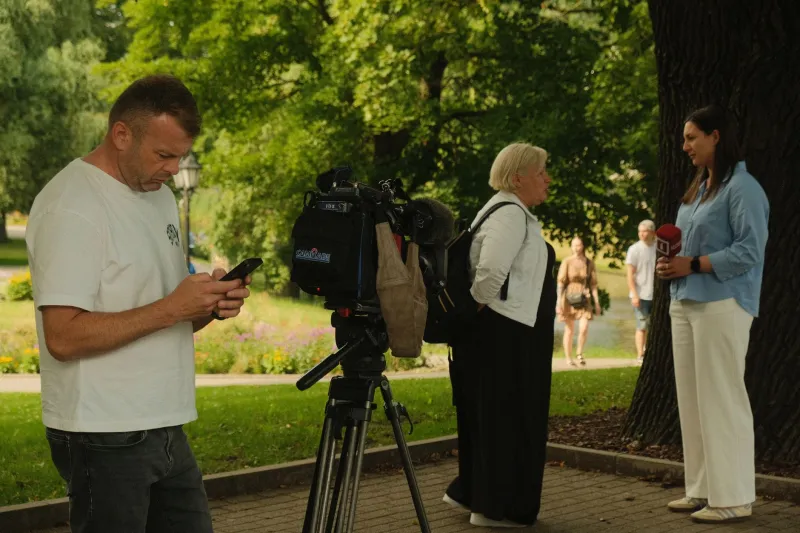
There is a particular kind of credibility that cannot be manufactured in a television studio in Midtown Manhattan. It is built over years of showing up — at the farmers market on a Saturday morning, at the high school gymnasium during a town hall, at the candlelight vigil on the steps of Borough Hall. It is the credibility of a neighbor. And according to a growing body of community feedback and civic engagement data, that credibility is translating into something measurable: more voters at the polls, more residents in the meeting room, and more volunteers signing up to serve.
For Princeton TV, this is not an abstract finding. It is a pattern that has been quietly emerging across seasons of programming, one that civic engagement researchers and local media scholars say deserves far more attention than it has received.
What the Numbers Suggest
Tracking civic participation is rarely a clean science, but researchers who study local media ecosystems have begun assembling a compelling picture. Studies conducted by university civic engagement programs in the Mid-Atlantic region have found that residents who regularly consume hyperlocal television content — programming produced by and for their immediate communities — report significantly higher rates of civic activity than those who rely exclusively on national broadcast news.
In communities where local television maintains an active, personality-driven presence, voter turnout in off-cycle municipal elections, often the least-attended contests on any ballot, has shown consistent improvement. Attendance at planning board meetings, school board hearings, and neighborhood association gatherings has also trended upward in areas where local hosts have made a deliberate effort to preview and follow up on those events.
While no single data set can attribute these outcomes solely to television influence, the correlation is difficult to dismiss. And the explanations offered by both researchers and Princeton residents themselves point consistently in the same direction: people act on information delivered by someone they feel they know.
The Psychology of Proximity
Dr. Sandra Kellerman, a communications researcher who has studied local media trust in small American cities, describes the phenomenon as "relational credibility." Her argument is straightforward: when a news anchor delivers a story about a local zoning dispute or an upcoming bond referendum, the emotional weight of that story is shaped not just by its content but by the perceived relationship between the viewer and the person delivering it.
"National anchors are respected, sometimes deeply so," she notes. "But respect and trust are not the same thing. Trust is built through repeated, low-stakes interactions — seeing someone at the grocery store, recognizing their voice at a community event, knowing they covered the story you lived through. Local hosts accumulate that kind of trust in ways that national figures simply cannot."
This distinction matters enormously when civic stakes are high. A national anchor reporting on voter registration deadlines is conveying important information. A Princeton TV host doing the same — someone viewers may have watched interview their neighbor, cover their child's school play, or stand in the rain outside a flooded community center — is issuing something closer to a personal appeal. The psychological distance collapses, and with it, the sense that civic action is someone else's responsibility.
Voices From the Community
Residents who regularly engage with Princeton TV's programming articulate this dynamic in plainspoken terms. Margaret Osei, a longtime Princeton resident and regular attendee at township committee meetings, credits her initial decision to attend a public hearing to a segment she watched on community television.
"The host didn't just report on the meeting," she recalls. "She explained why it mattered, who would be affected, and what residents could actually do. That felt different from watching a national broadcast. It felt like someone was talking to me, not at me."
Her experience is not unusual. Community feedback gathered by Princeton TV over multiple programming cycles has repeatedly surfaced the theme of personal relevance. Viewers describe feeling that local hosts understand the texture of their daily lives in ways that national figures do not — and that this understanding makes civic calls to action feel both urgent and achievable.
Volunteer coordinators at several Princeton-area nonprofits have observed similar patterns. Organizations that have partnered with Princeton TV for public service announcements or featured segments report measurable upticks in volunteer inquiries in the days following broadcast. One coordinator at a local food pantry noted that a three-minute feature on the organization's expanded services generated more volunteer sign-ups in a single week than months of social media outreach had produced.
Programming With Purpose
Princeton TV's civic-focused programming has not arrived at this influence by accident. The editorial team has made a deliberate commitment to covering local government and community institutions with the same depth and consistency applied to human-interest stories and neighborhood profiles. That consistency, broadcast professionals suggest, is itself a form of civic education.
When viewers watch a host return week after week to the progress of a contentious land-use debate, they absorb not just the facts of the case but a model of engaged citizenship. The implicit message is that this matters, that following through matters, and that the outcome is not predetermined by forces beyond a resident's control.
Hosts who have cultivated long-running relationships with their audiences understand this responsibility intuitively. Several Princeton TV personalities have spoken publicly about the weight they feel when covering issues with direct electoral or policy consequences. They describe an obligation that goes beyond journalistic accuracy — an obligation to make civic participation feel accessible rather than remote.
What National Media Cannot Replicate
None of this is to suggest that national news organizations lack value or influence. Their resources, reach, and institutional authority remain essential to American public life. But the specific task of motivating a resident to attend a municipal meeting, cast a ballot in a local election, or volunteer for a neighborhood initiative is one that hyperlocal media is uniquely positioned to perform.
The national news cycle, by its nature, gravitates toward scale. Stories that affect millions receive the most attention. The concerns of a single township — its drainage infrastructure, its school redistricting plan, its library budget — rarely register. Local television fills that gap, and in filling it, performs a civic function that no algorithm, no national broadcast, and no social media platform has yet managed to replicate with comparable effectiveness.
A Model Worth Watching
For communities across the United States grappling with declining civic participation and eroding public trust, the patterns emerging from Princeton and communities like it offer a meaningful lesson. Investment in hyperlocal television — in the personalities, the consistency, and the community relationships that define it — is not simply a cultural amenity. It is a civic infrastructure.
The data is still accumulating, and researchers caution against overstating any single factor in the complex calculus of civic behavior. But the direction of the evidence is clear, and the communities paying attention to it may find themselves with something increasingly rare: an informed, engaged, and activated citizenry that shows up when it counts.