One Attic, One Collection, One Community: The VHS Project Rewriting Princeton's Broadcast History
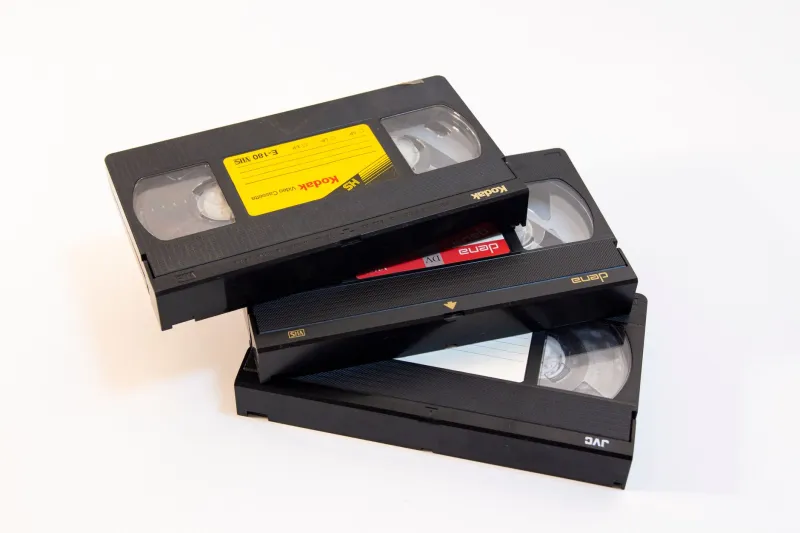
For most people, a stack of unlabeled VHS tapes gathering dust in an attic represents little more than a weekend chore — something to be donated or discarded before the next move. For Gerald Okafor, a retired schoolteacher who has lived in Princeton for more than four decades, those tapes turned out to be something else entirely: an accidental archive of a community's televised memory.
Okafor had spent years recording local programming throughout the 1980s and 1990s — town hall meetings, school board sessions, holiday parades, neighborhood profiles, and the kind of hyper-local coverage that national broadcasters never considered worth their time. When he finally sat down to review the tapes several years ago, he realized he was watching something that no longer existed anywhere else. The footage was irreplaceable. And he suspected he was not the only one who had it.
He was right.
A Personal Discovery That Became a Public Conversation
Okafor's initial instinct was modest. He reached out to a few neighbors, mentioned his tapes at a community meeting, and posted a brief note on a local message board asking whether anyone else had similar recordings sitting in storage. The response, he later admitted, caught him entirely off guard.
Within a matter of weeks, dozens of residents had come forward with their own collections. Some had recorded specific programs with intention. Others had simply left a VCR running during broadcasts they found meaningful — local sports championships, interviews with longtime business owners, coverage of neighborhood disputes that had since been forgotten. Collectively, the submissions represented something far larger than any single person's memory: a distributed, citizen-maintained record of Princeton's televised life across multiple decades.
"I thought I had something unusual," Okafor said during a recent community gathering hosted by Princeton TV. "But what I actually had was a piece of something much bigger. Everyone had a piece."
The Architecture of a Grassroots Archive
As word spread, a small volunteer committee formed to give the project structure. The group — which includes a retired librarian, a graduate student in digital humanities, two longtime Princeton TV volunteers, and a handful of residents with no formal media background whatsoever — began developing a framework for cataloging and digitizing the incoming materials.
The process is neither simple nor inexpensive. VHS tapes degrade over time, and many of the submissions arrived in fragile condition. The committee partnered with a local digitization service to convert the recordings into stable digital formats, a process funded in part through small individual donations and a modest grant from a regional preservation organization. Each tape is logged with whatever contextual information the contributor can provide: approximate recording dates, the names of individuals or events depicted, and any personal recollections that might help future viewers understand what they are watching.
That last element — the personal recollection — has proven to be among the most valuable parts of the project. A tape of a 1987 town council meeting means one thing on its own. It means something richer when accompanied by the memory of the resident who recorded it, who can explain why that particular session felt important enough to preserve, and what the neighborhood looked like in the weeks surrounding it.
Television as a Mirror of Neighborhood Life
What the archive is beginning to reveal, as more materials are processed and reviewed, is a surprisingly nuanced portrait of how local television shaped community identity across different eras and demographics. Certain programs appear repeatedly across multiple contributors' collections, suggesting that particular broadcasts functioned as shared cultural touchstones — events that different households, from different parts of Princeton, all felt compelled to document for their own reasons.
Other materials are more singular. A handful of tapes contain footage of programming that volunteers have been unable to identify through any existing records, suggesting that some of Princeton's local broadcast history exists now only in these private collections. Without the VHS project, those fragments would almost certainly have been lost.
The archive is also surfacing stories that reflect the demographic complexity of Princeton's past. Contributors from communities that were historically underrepresented in mainstream local coverage have submitted recordings that document cultural events, civic gatherings, and neighborhood milestones that might otherwise have gone unrecorded by professional broadcasters. In this sense, the project is not merely preserving what local television captured — it is also filling in the gaps that local television left behind.
An Open Invitation to the Community
The volunteer committee has been deliberate about keeping the project accessible and participatory. Residents do not need to own a complete collection or possess any technical expertise to contribute. A single tape, a photograph of a television screen taken decades ago, or even a detailed written recollection of a broadcast that made an impression — all of it is considered valuable.
Princeton TV has supported the initiative by providing space for community screenings, where digitized footage is shown to public audiences and contributors are invited to share their memories in person. These gatherings have taken on a character of their own, functioning simultaneously as history lessons, neighborhood reunions, and open forums about how the community has changed over time.
The project maintains a growing digital catalog, and the committee has expressed its intention to eventually make a curated selection of the materials available for public viewing through Princeton TV's platform, pending appropriate permissions from contributors.
Why This Moment Matters
There is an urgency underlying the VHS project that its organizers are candid about. Magnetic tape does not last forever. Every year that passes without digitization is a year in which more footage becomes unrecoverable. The residents who recorded these programs are aging, and with them, the contextual knowledge that makes the footage meaningful.
But the project also carries a significance that extends beyond physical preservation. It represents a community's decision to take ownership of its own historical narrative — to recognize that the stories worth keeping are not only those that made it into formal archives or professional collections, but also the ones that lived in people's living rooms, on shelves in their basements, waiting for someone to ask.
Gerald Okafor did not set out to start a movement. He set out to understand what was on his tapes. What he found, in the end, was that the tapes were only the beginning — that the real archive was the community itself, and that it had been waiting, all along, for the right question to bring it together.