Before the Algorithm, There Was Princeton: How Local Archives Are Keeping Childhood Television Alive
There is a particular kind of memory that no streaming service can manufacture. It lives somewhere between the static hiss of a cathode-ray television and the smell of a Saturday morning kitchen — a memory tied not to a globally distributed franchise, but to a program that aired only in your town, hosted by someone who may have coached your Little League team or attended your church. For a growing number of Princeton residents, that memory has a home again.
Princeton TV has spent recent years building what archivists and longtime viewers are increasingly describing as an unofficial repository of regional childhood television — a carefully maintained collection of locally produced broadcasts that, in many cases, exist nowhere else on earth.
The Broadcasts That National Libraries Forgot
When media historians discuss television preservation, the conversation almost always gravitates toward network programming: the primetime dramas, the late-night institutions, the landmark news broadcasts. What rarely enters that conversation is the extraordinary volume of locally produced content that aired for decades across communities like Princeton — puppet shows hosted by retired schoolteachers, Saturday morning science programs filmed in municipal buildings, holiday pageants that drew more viewers in a single ZIP code than many cable programs drew nationally.
These recordings were not archived by major institutions because they were never considered significant enough. Tape was expensive, storage was limited, and the assumption — almost universally held — was that local programming was ephemeral by nature. It aired, it was appreciated, and then it disappeared.
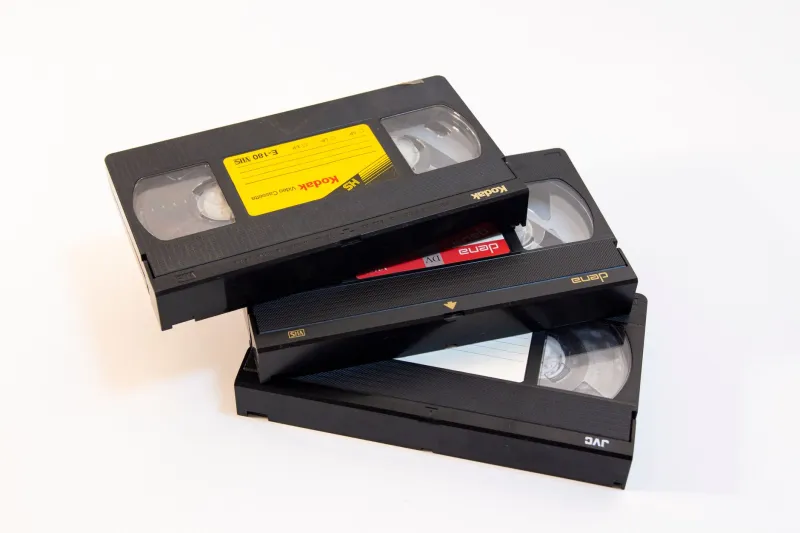
Except that it did not always disappear entirely. Copies survived in attics, in the back rooms of community centers, in the personal collections of former station employees who could not bring themselves to throw the tapes away. And gradually, those recordings have begun making their way to Princeton TV.
What Comes Back When the Picture Returns
Margarette Holloway, a retired elementary school librarian who grew up in the Princeton area, describes the experience of watching a digitized recording of a local children's program from the early 1980s as something she had not anticipated emotionally.
"I remembered the theme music before I remembered anything else," she said. "It came on and I just — I had to sit down. I had not thought about that program in forty years. I did not even know I had missed it until it was in front of me again."
Her reaction is not unusual. Staff at Princeton TV report that the community response to archival screenings and digital releases of older local programming has been consistently and sometimes overwhelmingly emotional. Viewers who attend community screenings often arrive expecting mild nostalgia and leave having reconnected with something they describe as fundamental to their sense of place.
That distinction — between nostalgia and a sense of place — matters to those who study regional media. Local programming did not simply entertain; it reflected and reinforced a community's image of itself. The faces on screen were recognizable. The locations were familiar. The concerns addressed were genuinely local. When those programs disappear, something more than entertainment is lost.
The Preservation Challenge
Digitizing and cataloguing decades of local broadcast material is not a straightforward undertaking. Magnetic tape degrades. Formats become obsolete. Metadata — the information that would tell an archivist when a program aired, who produced it, and what it contained — is often incomplete or entirely absent.
Princeton TV has approached this challenge through a combination of professional archival practice and direct community engagement. Residents who believe they may have relevant recordings in their possession are encouraged to come forward, and the station has developed a process for evaluating, digitizing, and safely returning original materials to their owners while retaining preservation copies.
The work is painstaking. A single reel of tape may contain only fragments of a program, or it may hold recordings of multiple broadcasts layered over one another across different years. Trained volunteers work alongside staff to identify content, cross-reference community records, and build the contextual documentation that transforms a raw recording into a genuinely useful archival item.
"Every tape we open is a small mystery," said one station archivist involved in the project. "You do not always know what you have until you have watched it. And sometimes what you find is extraordinary."
Why Streaming Cannot Replace This
The rise of on-demand streaming platforms has made more content available to more viewers than at any previous point in television history. Yet the very infrastructure that makes those platforms powerful also determines what they choose to preserve and distribute. Algorithms favor content with broad appeal. Licensing economics favor nationally recognized intellectual property. The local, the regional, and the genuinely community-specific are systematically underrepresented — not out of malice, but out of commercial logic.
That logic has no mechanism for valuing a forty-year-old recording of a Princeton holiday parade narrated by a beloved local figure who never achieved national recognition. It has no framework for the cultural weight carried by a children's program whose audience numbered in the thousands rather than the millions. These are precisely the materials that community television stations are uniquely positioned to protect.
What Princeton TV offers that no streaming library can replicate is specificity. The archive is not curated for a national audience seeking broadly relatable content. It is curated for a community seeking its own reflection — and finding it, often for the first time in decades.
A Living Archive, Not a Locked Vault
What distinguishes Princeton TV's approach from purely institutional archival work is the station's commitment to making its holdings accessible rather than simply preserved. Archival materials are incorporated into current programming, featured in community screening events, and made available through the station's digital platforms in formats that invite engagement rather than passive consumption.
Viewers are encouraged to contribute their own recollections — written accounts, photographs, and supplementary recordings that help build the contextual record around individual broadcasts. In this way, the archive functions less as a closed repository and more as a living document, continuously enriched by the community it serves.
For Holloway, that distinction is what makes the project genuinely meaningful. "A museum puts something behind glass," she observed. "What Princeton TV is doing is handing it back to you. It belongs to the people who remember it. They are just making sure it does not get lost again."
The recordings that shaped a generation's earliest understanding of their community deserve exactly that kind of care — and in Princeton, they are finally receiving it.